Fiction has taken the wheel, and self-help is riding in the back
Fiction drives the global book market while non-fiction slips: mixed H1 2026 results
The international book market shows two faces in the first half of 2026: fiction continues its rise while non-fiction remains under pressure. This is the finding of the half-year report by NielsenIQ BookData and GfK Entertainment, presented ahead of the Frankfurt Book Fair. It is based on physical point-of-sale data from 19 regions.

Published: 5.10.2026 | Foto / Video: AI generated, Magnific
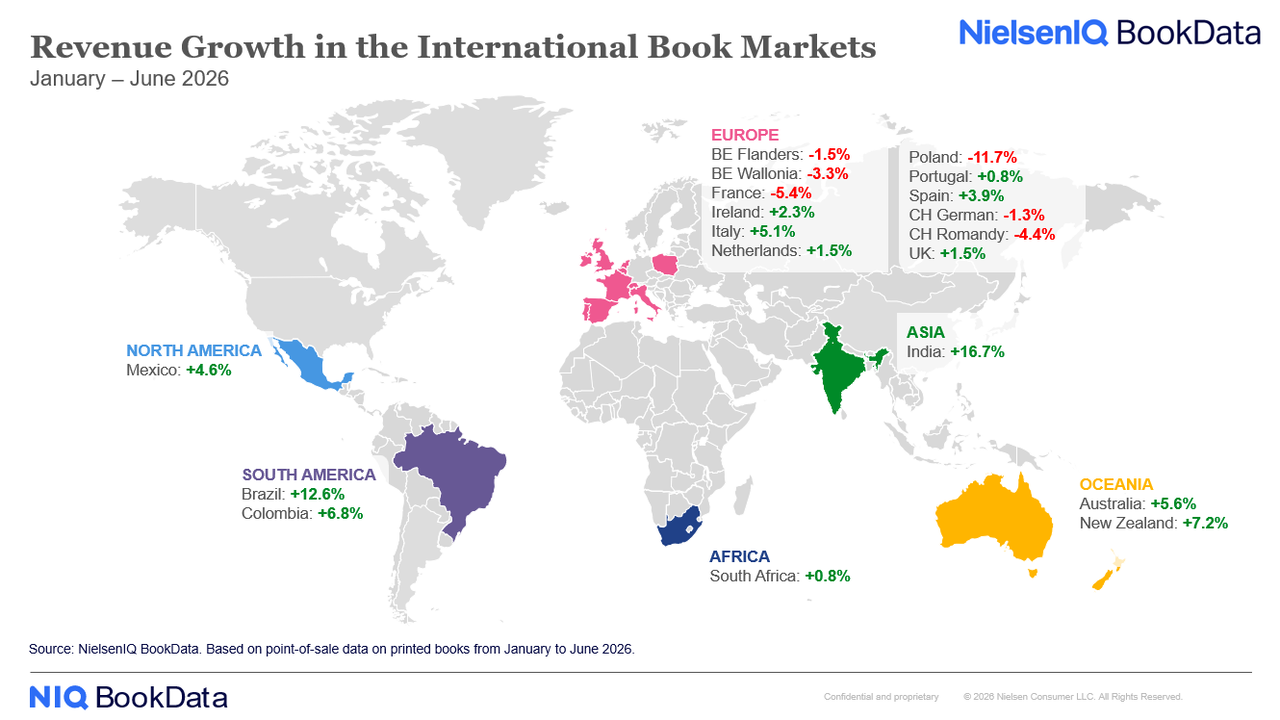
The strongest year-on-year revenue gains came from India (+16.7 percent) and Brazil (+12.6 percent), followed by New Zealand (+7.2 percent), Colombia (+6.8 percent), Australia (+5.6 percent), Italy (+5.1 percent), Mexico (+4.6 percent) and Spain (+3.9 percent). The UK and the Netherlands (+1.5 percent each) and Ireland (+2.3 percent) grew moderately.
Poland (−11.7 percent) and France (−5.4 percent) recorded clear declines. Romandy (−4.4 percent), Wallonia (−3.3 percent), Flanders (−1.5 percent) and German-speaking Switzerland (−1.3 percent) also lost revenue.
Unit sales paint a similar picture: nine regions sold more books, led by Brazil (+10.5 percent) and India (+8.3 percent). Many European markets lost volume, including Poland (−11.3 percent), France (−6.2 percent) and Wallonia (−4.9 percent). With 124 million books sold, France is the largest market in the analysis, followed by the UK with 82 million units (−1.1 percent). Average prices rose in eleven of the 19 regions, mostly by less than the 4.7 percent global inflation the IMF forecasts for 2026.
Fiction: more than a third of all books sold
Fiction remains the main growth driver. It increased revenue in three quarters of the regions studied, often by double digits. On average across countries, fiction now accounts for more than a third of all books sold.
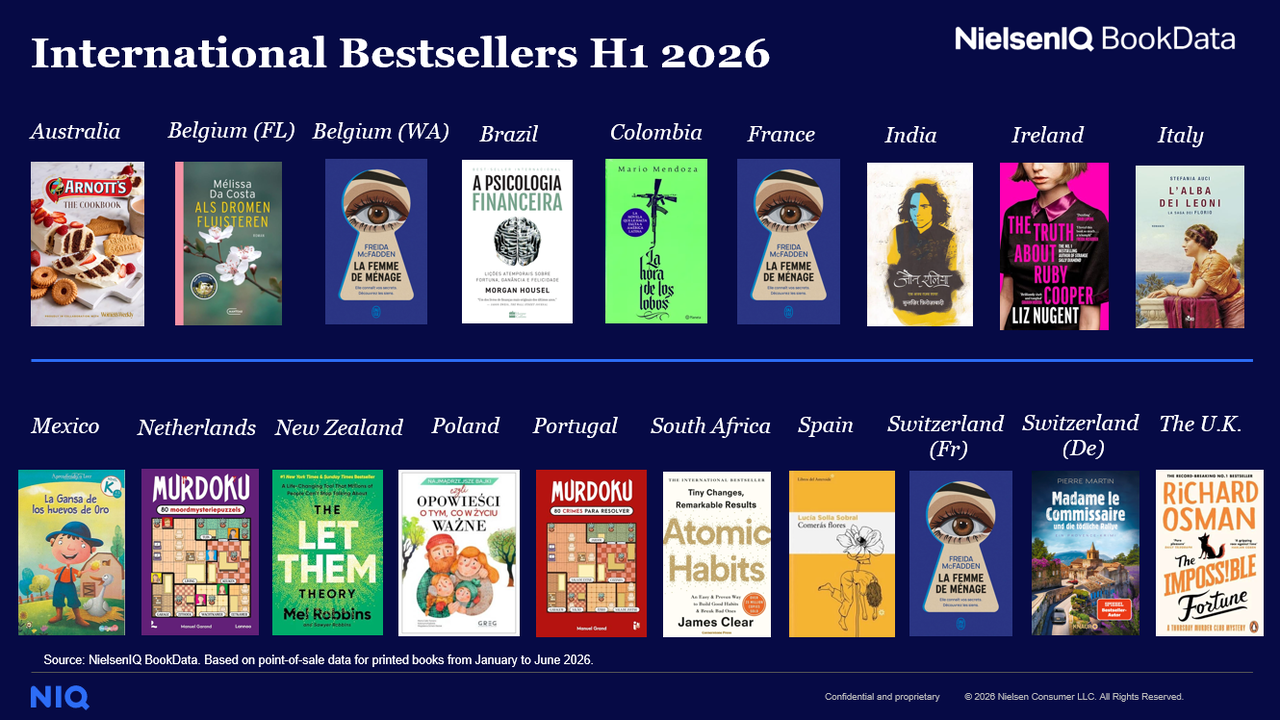
Crime and thrillers are especially popular. Freida McFadden ("The Housemaid") reached the top 20 in 13 regions and placed multiple titles in the top 10 in several markets: eight times in Wallonia, and six times each in France and Romandy. "La Femme de ménage" tops the bestseller lists in Belgium (Wallonia), France and French-speaking Switzerland.
Demand for science fiction and fantasy is also unbroken. Romantasy authors such as Rebecca Yarros ("Empyrean") and Sarah J. Maas ("Throne of Glass") are among the retail trade's strongest drivers, fueled by the BookTok community, which introduces genre fiction to a young, international audience. Graphic novels are among the fastest-growing segments, with growth well above 30 percent in many countries.
Non-fiction: self-help loses momentum
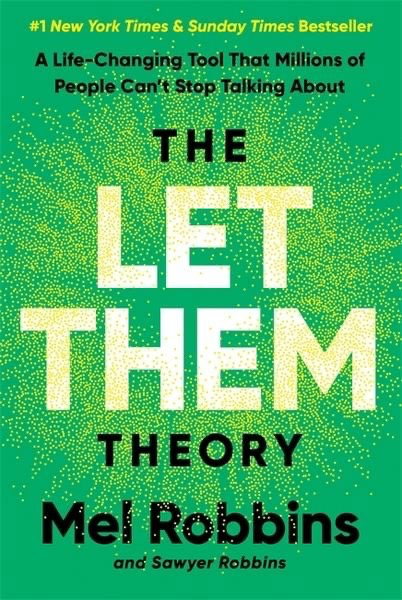
Non-fiction, by contrast, grew revenue in only four countries. In many markets the balance is shifting toward fiction: in Brazil, non-fiction accounted for more than half of titles sold five years ago, but its share is now 40 percent. Declines are sharpest in self-help and personal development. Titles such as James Clear's "Atomic Habits" and Mel and Sawyer Robbins' "The Let Them Theory" remain international bestsellers, topping the lists in South Africa and New Zealand respectively. Even so, the genre has lost momentum: apart from New Zealand, it is declining in every region.

Children's and young adult: ten regions up
The children's and YA market also delivers a mixed result. Ten of the 19 regions recorded revenue growth. Individual series and brands still reach enormous audiences, while comics and serial formats play an important role. In the UK, the influence of events such as World Book Day is clearly visible.