Innovative model, small footprint
Google launches interactive e-book feature with publisher backing
"Expert Intelligence" allows readers to query purchased e-books through AI while addressing copyright concerns that have plagued other large language models — a distinction publishers say sets it apart. But Google’s small e-book market share caps the immediate potential of "EI". Update: Elsevier launches "Nora AI" for healthcare education

Published: 31.8.2026 | Foto / Video: Google
Google has introduced Expert Intelligence (EI), an AI application that enables readers to interact with e-books purchased through Google Play Books, marking a departure from the contentious relationship between tech companies and publishers over AI development. The feature, launched with more than 100,000 English-language titles, primarily nonfiction, allows users to ask questions, generate quizzes, and create infographics based on book content through Google's Gemini Notebook tool.
The reception from publishers has been notably positive. The key differentiator: Google is working directly with publishers to isolate information provided to users, ensuring responses derive exclusively from the purchased book rather than from aggregated training data used by most large language models.
Why this matters now and how the technology works
The launch comes at a critical juncture for the publishing industry's relationship with AI technology. In July 2026, publishers and authors filed a lawsuit alleging Google engaged in widespread copyright infringement while developing its Gemini AI models. Against this backdrop, Expert Intelligence represents an attempt to demonstrate how AI applications can be developed within existing copyright frameworks.
Expert Intelligence was developed by nonfiction author Stephen Johnson, who joined Google Labs in July 2022. The application enables users to pose questions about books they are reading, with responses delivered either as direct quotations or AI-generated syntheses of the content.
Additional features include the ability to generate slide decks, create infographics highlighting key data, and produce quizzes. Users can also combine expertise from multiple purchased books with their own materials — for instance, uploading journal entries alongside a health book to receive personalized advice.
Crucially, the system requires book ownership through Google Play Books. If a user shares a notebook containing a book, collaborators must purchase their own copy to access that content.
Elsevier launches AI assistant for healthcare e-books
Google is not alone in pushing for embedded, source-grounded AI tools: just days prior to Google's announcement, academic publisher Elsevier introduced "Nora AI" for healthcare education. Built into Elsevier e-books via VitalSource's Bookshelf platform, Nora AI allows students and educators to query textbook material directly within their workflow. Like Google's EI, Nora AI draws responses strictly from assigned, peer-reviewed course content rather than the open web, offering Socratic coaching ("Tutor Mode") to help healthcare students build critical thinking skills for clinical practice.
"Healthcare education is at a pivotal time as AI creates new opportunities to support how students learn and educators teach,” said Brent Gordon, president of global healthcare education at Elsevier, said in a statement. “Nora AI gives students timely support within the flow of learning and provides educators with a reliable resource that complements their instruction."
Publisher participation and expansion plans
The initial launch of Google includes titles from major publishers: Bloomsbury, De Gruyter Brill, Johns Hopkins University Press, Macmillan, O'Reilly Media, and Penguin Random House. Google has also collaborated with more than 15 bestselling authors—including Steven Pinker, Michael Pollan, and Jennifer Wallace—to create Featured Notebooks that supplement their books with additional curated sources.
Johnson indicated the feature could expand beyond nonfiction trade titles to encompass textbooks, academic journals, and self-published works. The launch is currently limited to titles purchased through Google Play Books, though Expert Intelligence-enabled content will eventually be available through additional products, including the Gemini app and AI Mode in Search.
Comparable approaches in the audio and media sector
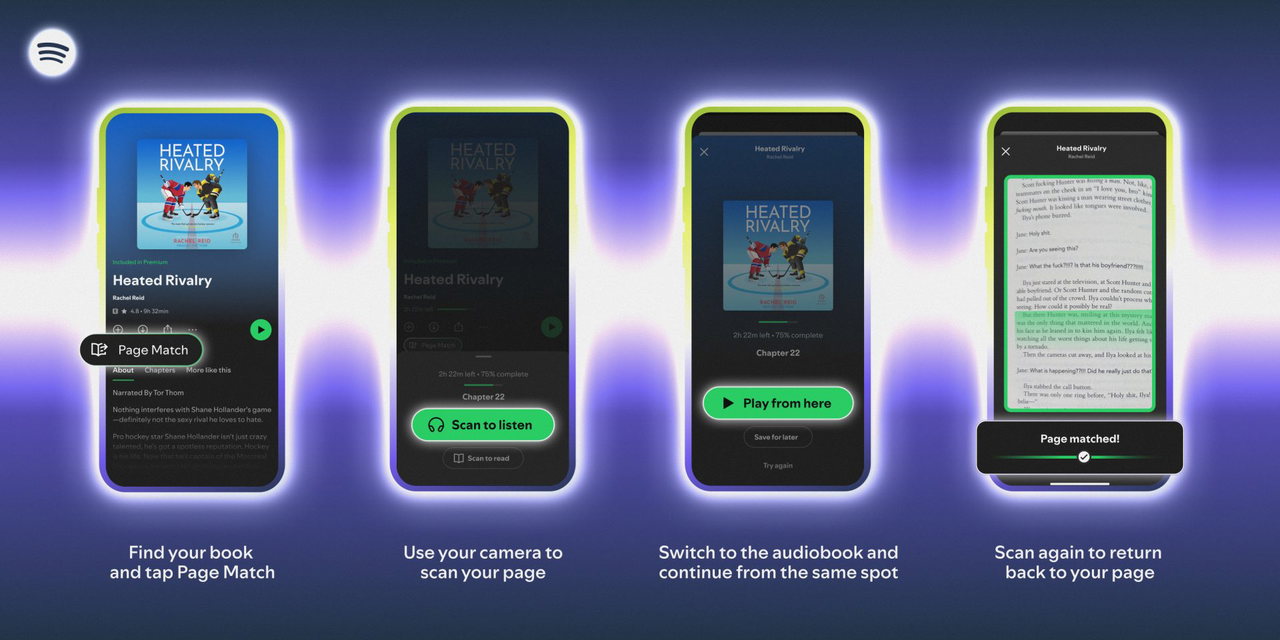
In the audiobook and audio industry, the concept behind Expert Intelligence aligns with several emerging AI-driven formats.
Industry response: cautious optimism
Publisher reactions centered on Google's approach to copyright protection and the purchase requirement. Nihar Malaviya, CEO of Penguin Random House, stated that Expert Intelligence "is an example of how AI use cases can be developed responsibly." He specifically commended Google's commitment to building copyright protections and transparent attribution into the experience.
Mary Rasenberger, CEO of the Authors Guild, called EI "a positive step forward in the legitimized use of books in the AI ecosystem to the benefit of readers, publishers and authors alike." However, she noted that without knowing specific deal terms, she remains hopeful that "these kinds of arrangements should open up new audiences for books" while ensuring authors and publishers retain control.
Author Kim Scott, whose 2017 management book "Radical Candor" is included in the launch, stated she believes Expert Intelligence will improve engagement with her books while offering readers more efficient access to specific passages without manual searching.
Implications for publishing's AI future
Expert Intelligence represents a potential template for how technology companies might develop AI applications that satisfy both user demand for enhanced functionality and publisher requirements for copyright protection. The purchase requirement addresses a fundamental concern: that AI tools might provide book content without generating revenue for rights holders.
However, several questions remain unanswered.
- The financial terms between Google and participating publishers have not been disclosed.
- For smaller publishers, the program's accessibility is uncertain.
- The feature's limitation to Google Play Books purchases also raises questions about market dynamics, given Google's substantially smaller e-book market share compared to Amazon's. – So far, this AI offensive is clearly operating within a niche.
Nevertheless, the positive reception from publisher executives suggests Expert Intelligence has achieved something significant: demonstrating that AI enhancement of reading experiences and respect for copyright need not be mutually exclusive. Whether this approach becomes an industry standard will depend on both its commercial success and the willingness of other technology companies to adopt similar copyright-first frameworks.